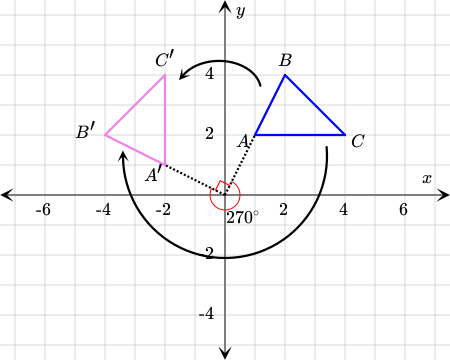
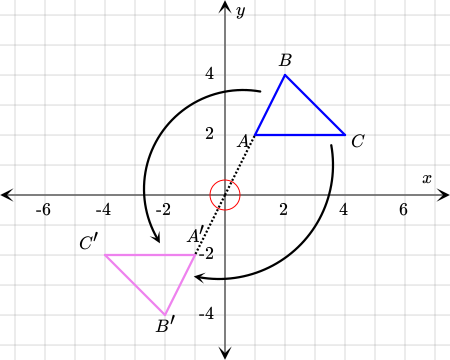
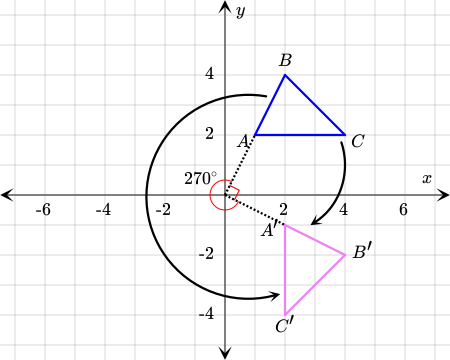
If you rotate a figure 90^(∘) counterclockwise, how many more degrees do you need to rotate the figure to bring it back to it's original location? How about if you rotate it 180^(∘) or 270^(∘)?
90^(∘) clockwise: (a,b)→ (b,- a)
180^(∘) clockwise: (a,b)→ (- a,- b)
270^(∘) clockwise: (a,b)→ (- b, a).
Practice makes perfect
When we rotate a figure 90^(∘) counterclockwise about the origin, the vertices of that figure will change in the following way.
(a,b)→ (- b, a)
However, rotating a figure counterclockwise by 90^(∘) is the same thing as rotating it clockwise by 270^(∘).
Therefore, we can conclude that the rules for rotating a figure by 90^(∘) counterclockwise is the same as rotating it 270^(∘) clockwise.
When we rotate a figure 180^(∘) counterclockwise about the origin, the vertices of that figure will change in the following way:
(a,b)→ (- a, - b).
However, if we rotate something 180^(∘), it does not matter from which way you do it. The thing we rotate is going to end up at the same location anyway.
Therefore, we can conclude that the rules for rotating a figure by 180^(∘) counterclockwise is the same as rotating it 180^(∘) clockwise. Finally, when we rotate a figure 270^(∘) counterclockwise about the origin, the vertices of that figure will change in the following way.
(a,b)→ (b,- a)
However, rotating a figure counterclockwise by 270^(∘) is the same thing as rotating it clockwise by 90^(∘).
Therefore, we can conclude that the rules for rotating a figure by 270^(∘) counterclockwise is the same as rotating it 90^(∘) clockwise. Let's summarize the rules below.
90^(∘) clockwise:& (a,b)→ (b,- a)
180^(∘) clockwise:& (a,b)→ (- a,- b)
270^(∘) clockwise:& (a,b)→ (- b, a).