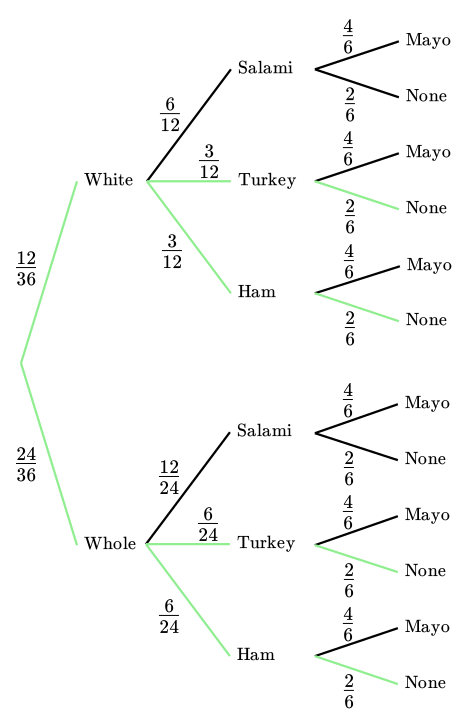
c Madison dislikes the sandwiches that Wade likes.
D
d Refer to the solution for Part C.
E
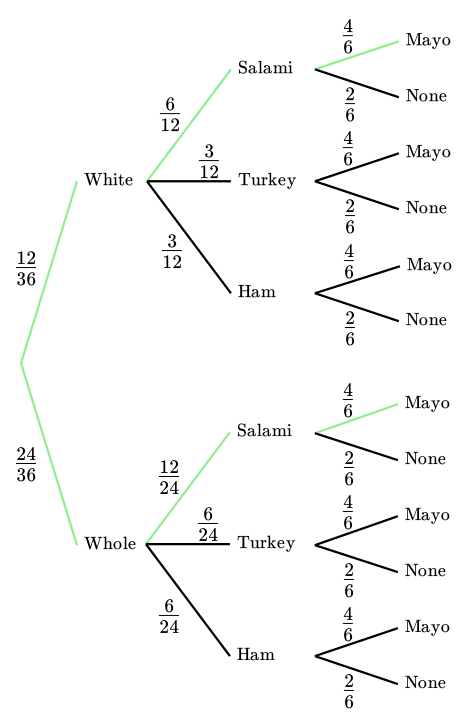
e The intersection of salami and mayonnaise are all sandwiches that have both salami and mayonnaise.
A
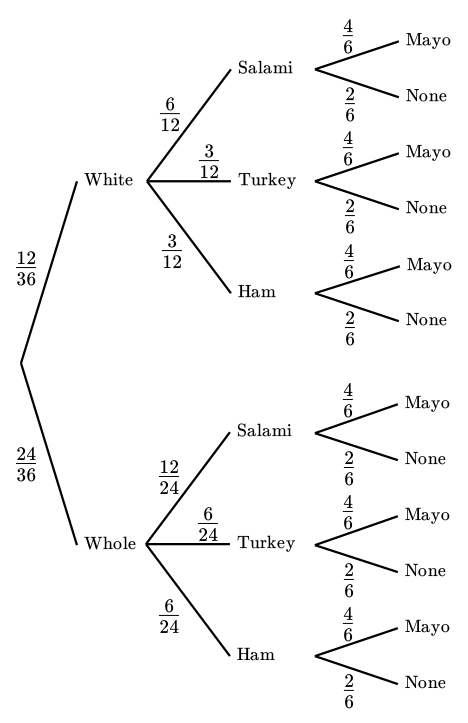
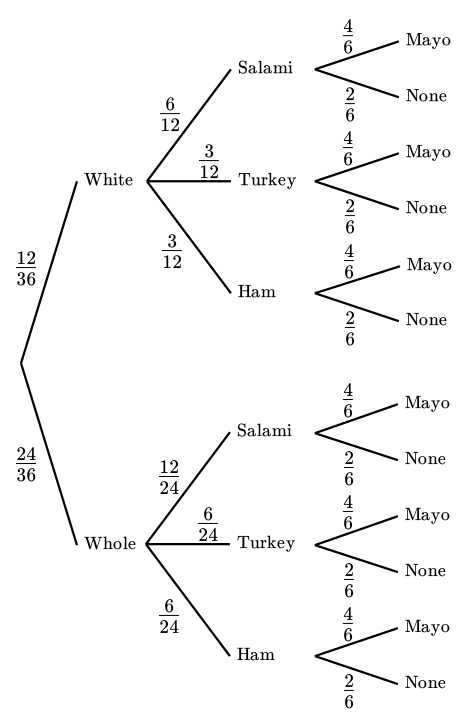
aDiagram:
B
bOutcomes That Wade Likes:
white bread, salami, mayonnaise
white bread, salami, none
white bread, turkey, mayonnaise
white bread, ham, mayonnaise
white-grain bread, salami, mayonnaise
white-grain bread, salami, none
white-grain bread, turkey, mayonnaise
white-grain bread, ham, mayonnaise
Probability: 56
C
cOutcomes That Madison Likes:
white bread, turkey, none
white bread, ham, none
white-grain bread, turkey, none
white-grain bread, ham, none
Probability: 16
D
d See solution.
E
e *white bread, salami, mayonnaise
whole-grain bread, salami, mayonnaise.
Practice makes perfect
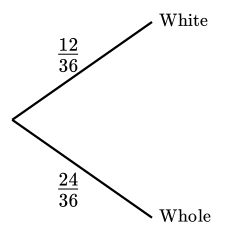
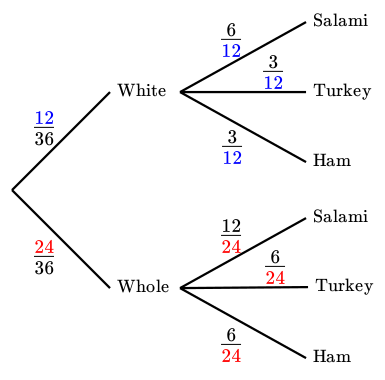
a We know that the cafeteria makes 36 sandwiches each day. Of these, 12 have white bread and 24 have whole-grain bread.
To add the second level of our diagram, we should consider how many sandwiches are white bread and how many are whole grain.
To build the third level we should consider how many sandwiches are white and with salami, white and with turkey, and so on.
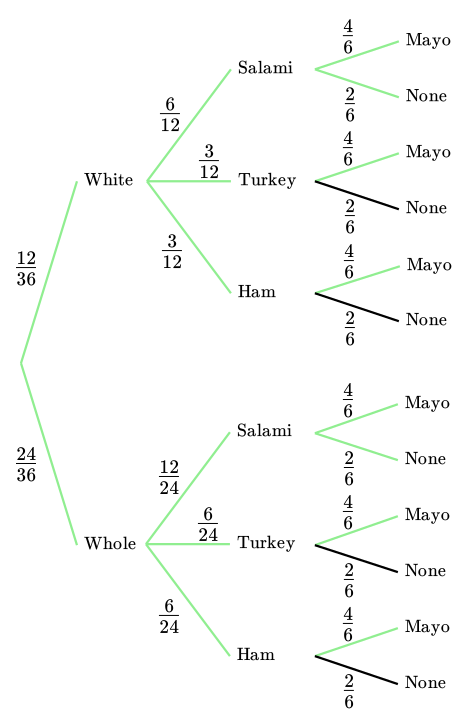
b Let's highlight the paths through the tree which gives a sandwhich that Wade likes. That is, all sandwiches that have either salami and/or mayonnaise.
By the Multiplication Rule of Probability we can calculate the probability of each highlighted path through the tree.
cl
P(W,S,M): & (12/36)(6/12)(4/6)=1/9 [0.8em]
P(W,S,N):& (12/36)(6/12)(2/6)=1/18 [0.8em]
P(W,T,M):& (12/36)(3/12)(4/6)=1/18 [0.8em]
P(W,H,M):& (12/36)(3/12)(4/6)=1/18 [1.6em]
P(G,S,M):& (24/36)(12/24)(4/6)=2/9 [0.8em]
P(G,S,N):& (24/36)(12/24)(2/6)=1/9 [0.8em]
P(G,T,M):& (24/36)(6/24)(4/6)=1/9 [0.8em]
P(G,H,M):& (24/36)(6/24)(4/6)=1/9
Finally, we have to add the probabilities to determine the probability of getting a sandwich that Wade likes.
P(salami or mayo): 1/9+1/18+...+1/9=5/6
The probability of Wade getting a sandwich he likes is 56.
c Let's highlight all outcomes that do not have salami or mayonnaise, which are combinations that Madison likes.
From Part B, we know that Wade likes any sandwich with salami or mayonnaise. Also, the probability of Wade choosing a sandwich he likes was 56. This must mean that the probability of choosing a sandwich that does not contain salami or mayonnaise — which is what Madison likes — must be the complement of this.
1- 56= 16
d See Part C!
e The intersection of salami and mayonnaise describes all sandwiches with both salami and mayonnaise. Let's highlight these paths through the diagram.
Therefore, there are two outcomes in the intersection of salami and mayonnaise.
&white bread,salami, mayonnaise
&whole-grain bread,salami, mayonnaise