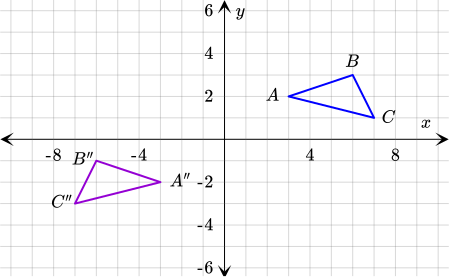
Here we are asked to graph △ ABC and after the glide reflection. Let's start with a translation.
Translation
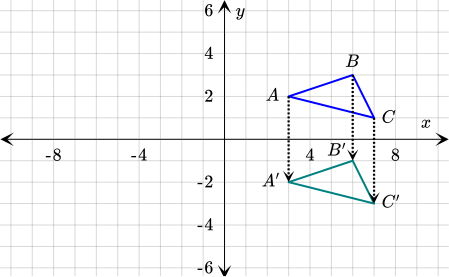
First, we are asked to translate △ ABC 4 units down. To do this, we have to subtract 4 from each y-coordinate.
(x,y) → (x,y- 4)
Let's do this.
Reflection
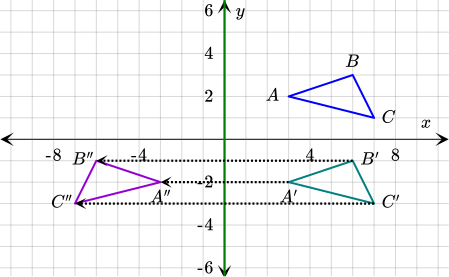
Next, we are asked to reflect all of the vertices of △ A'B'C' on the opposite side of the y-axis in a way such that the distance from the vertices to the y-axis remains the same. To do so, we need to multiply each x-coordinate by -1.
(x,y-4) → ( -x,y-4)
Let's perform the reflection.
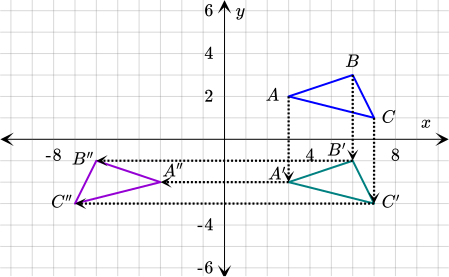
Final Glide Reflection
The final glide reflection is the combined translation and reflection.