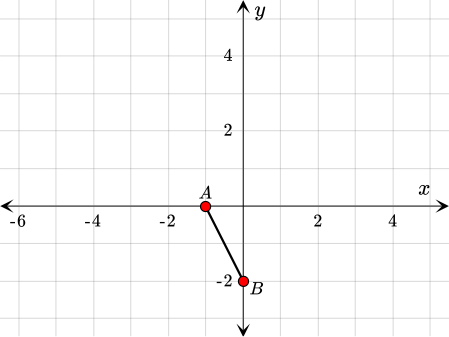
We are given that A(-1,0) and B(0 ,-2) are the endpoints of AB. Let's graph this line segment on a coordinate plane.
We will reflect the line segment across l_1 first and then across l_2. Then, we will determine whether the resulting transformation is a translation or a rotation.
Reflection Across l_1
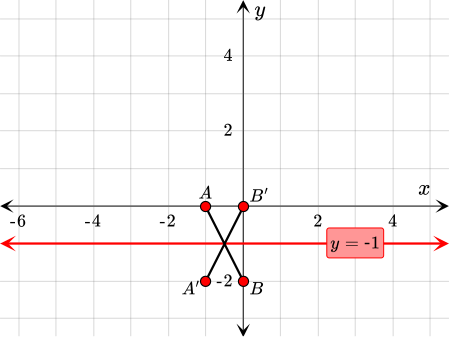
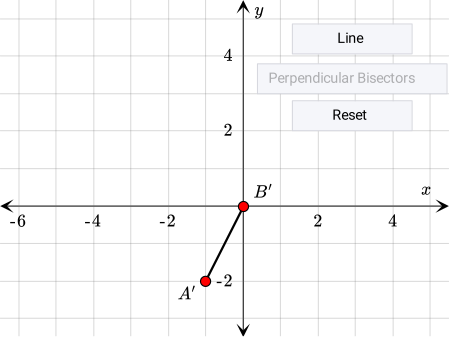
We will begin by drawing the line l_1, which is y=-1. This is the first line across which we want to reflect AB. Then we will locate the image of each endpoint so that y=-1 is the perpendicular bisector of the segment between each endpoint and its image.
If clarification on how to draw a line that passes through a given point and is perpendicular to a given line is needed, please refer to this explanation. Now, we can connect the new endpoints and get A'B'.
Reflection Across l_2
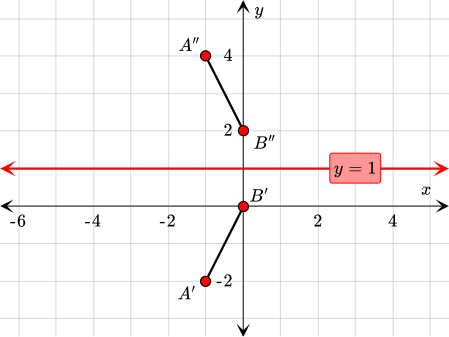
Next, we will reflect A'B' across l_2, which is y=1. Let's draw this line and locate the images of the endpoints so that the line is the perpendicular bisector of the segment between each endpoint and its image.
Finally, we can connect the endpoints and obtain A''B''.
Translation or Rotation?
Let's review a theorem that tells us what happens if we reflect an object across parallel lines.
Reflections Across Parallel Lines
A composition of reflections across two parallel lines is a translation.
Now we will review a theorem about reflecting an object across intersecting lines.
Reflections Across Intersecting Lines
A composition of reflections across two intersecting lines is a rotation. The figure is rotated about the point where the two lines intersect.
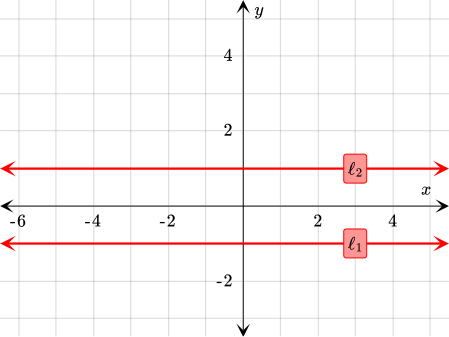
Now, let's draw l_1 and l_2 on the same coordinate plane.
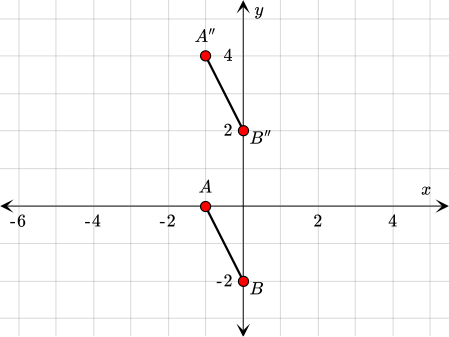
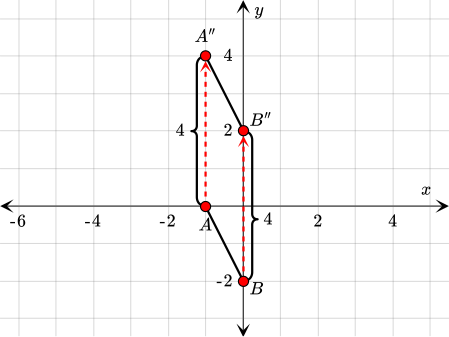
We can see that the two lines are parallel. Therefore, the given transformation is a translation. To measure the direction and distance, let's graph both AB and A''B'' and measure the distance between the their endpoints.
As we can see, the distance is 4 units. We can conclude that the given transformation is a vertical translation 4 units up.