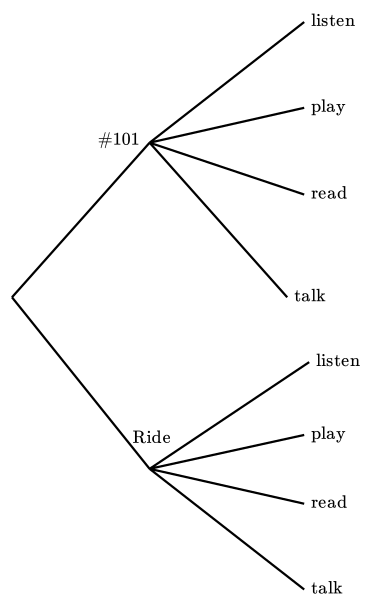
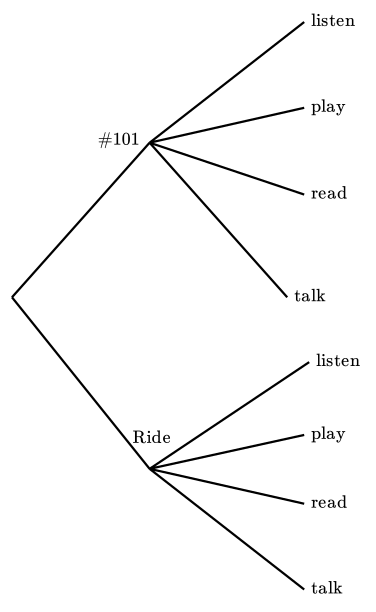
a Note that regardless of the method he chooses to get home, he can do the same activities in the meantime.
B
b Assume that each option of rides is equally likely, as are the four activities he can do while on his way home.
A
a
B
b 1/4
Practice makes perfect
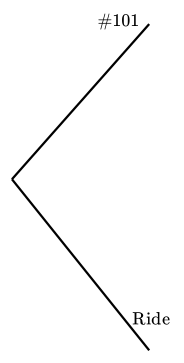
a We want to make a tree diagram for all the possible outcomes. Greg has two choices of how to get home. He can go by bus or by catching a ride with his brother.
While going home, Greg can do one of four things: listen to his MP3 player, play video games, read his novel for English, or talk to someone. Let's add these activities to the branches.
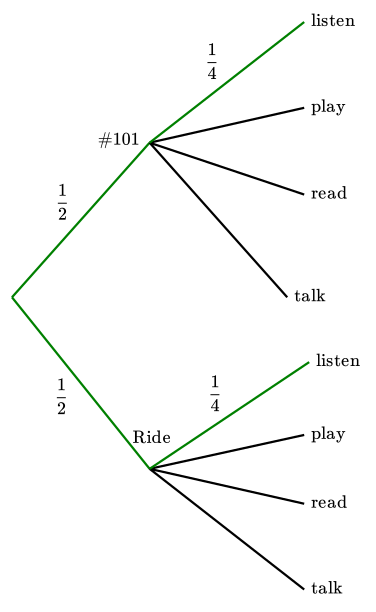
b To calculate the probability that Greg uses his MP3 player, we will mark all of the paths where he uses it. We will assume that it is equally likely that he takes the bus or hitches a ride with his brother. Therefore, the probability of either option is 12. Also, the activities on the way home are equally likely, and therefore the probability of selecting one is 14.
To calculate the probability of selecting each of the highlighted branches, we have to multiply their respective probabilities.
P(#101, listen): 1/2* 1/4=1/8 [1em]
P(ride, listen): 1/2* 1/4=1/8 [1em]
Finally, we will add the calculated probabilities.
P(listen): 1/8+1/8=2/8
The probability of Greg listening to his MP3 player is 28, which can be reduced to 14.