Let's begin by identifying the maximum and minimum values from the given data.
Then we can define the intervals for each line of our table.
81, 70, 73, 89, 68, 79, 91, 59, 77, 73, 80, 75, 88, 65, 82, 94, 77, 67, 82
The minimum value is 59 and the maximum value is 94. In this case, we are told to use intervals of 5. Let's list the intervals in the first column of our frequency table.
Test Scores
Frequency
59 - 63
64 - 68
69 - 73
74 - 78
79 - 83
84 - 88
89 - 93
94 - 98
Now, let's count the number of values in each interval.
81, 70, 73, 89, 68, 79, 91, 59, 77, 73, 80, 75, 88, 65, 82, 94, 77, 67, 82
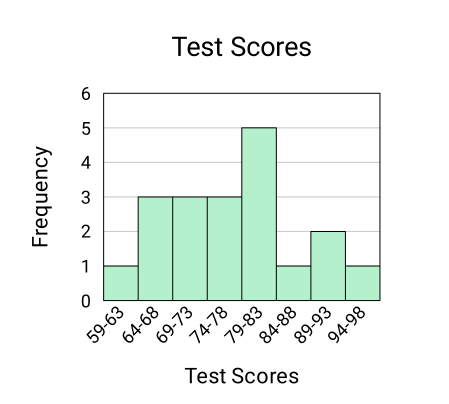
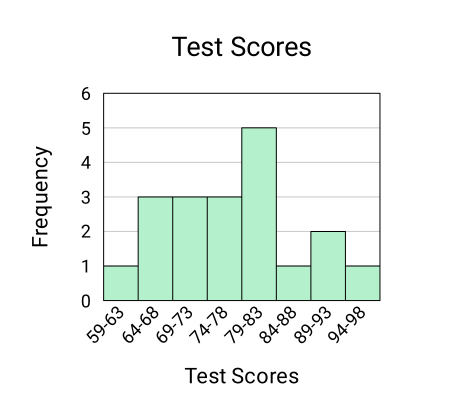
Looking at the data, we can see that there is 1 value in the first interval and 3 values in the second interval, 3 values in the third interval, 3 values in the fourth interval, 5 values in the fifth interval, 1 value in the sixth interval, 2 values in the seventh interval and 1 value in the eighth interval. Now we can complete the second column of our table.
Test Scores
Frequency
59 - 63
1
64 - 68
3
69 - 73
3
74 - 78
3
79 - 83
5
84 - 88
1
89 - 93
2
94 - 98
1
Histogram
Finally, let's make the histogram. We will draw a bar for each interval that we used in the frequency table and make the height of each bar equal to the frequency of the interval. Keep in mind that the bars should touch but not overlap. Do not forget to label the axes!