Sign In
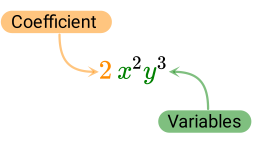
| Expression | Why It Is a Monomial |
|---|---|
| 5 | Any constant is a valid monomial. By the Zero Exponent Property, 5x0=5. |
| 0 | The coefficient of a monomial can be 0. |
| -2x5 | The coefficient can be negative. |
| 5x3y | A monomial can have numbers in the denominator. |
Although they appear to be monomials at first glance, the single-term expressions in the following table do not satisfy the definition of a monomial.
| Expression | Why It Is Not a Monomial |
|---|---|
| 2x-1 | The variables of a monomial cannot have negative integer exponents. |
| 4yx3 | Monomials cannot have variables in the denominator. |
| 5x3y21 | The variables of a monomial must only have whole number exponents. |