14. Compass and Straight Edge Constructions
Sign In
An error ocurred, try again later!
Chapter 1
14.
Compass and Straight Edge Constructions
Compass and straightedge constructions are foundational techniques that have been used for millennia. With these tools, one can create precise shapes and figures without the need for numerical measurements. One of the intriguing tasks is constructing a trapezoid using only a compass and straightedge. This technique requires a keen understanding of geometric principles and a steady hand. Such constructions not only hone one's skills but also provide a deeper appreciation for the intricacies of geometry.
Show less Show more expand_more 


Lesson Settings & Tools
| | 13 Theory slides |
| | 8 Exercises - Grade E - A |
| | Each lesson is meant to take 1-2 classroom sessions |
Compass and Straight Edge Constructions
Slide of 13
Construction in Geometry is a process of creating accurate geometric shapes by following specific steps. Constructions can be made using various tools and methods such as a compass, a straightedge, string, reflective devices, and paper folding. In this lesson, a compass and a straightedge will be used to construct geometric shapes.
Catch-Up and Review
Here are a few recommended readings before getting started with this lesson.
Explore
Using Circles to Construct Lines
Consider a segment with endpoints A and B. There are two circles with the same radius — centered at A and B, respectively. The radius can be adjusted, and a line that passes through the two circles' points of intersection can be drawn. 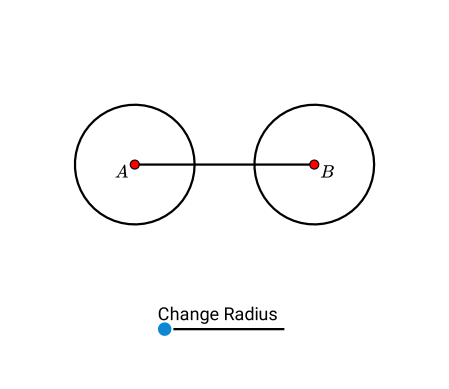 How is AB and the line passing through the circles' points of intersection related? There are several basic constructions in Geometry.
- Copying a segment
- Copying an angle
- Bisecting a Segment / Drawing a perpendicular bisector
- Bisecting an angle
- Drawing a perpendicular line through a given point
- Drawing a line parallel to a given line and through a given point
Discussion
Constructing a Copy of a Segment
Throughout the lesson, the constructions mentioned above will be performed. It is best to start with the most straightforward construction, that is, copying a segment.
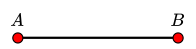
Using a straightedge and a compass, it is possible to construct a copy of a segment.
1
Draw a Segment Longer Than AB
expand_more Using a straightedge, draw a segment longer than the original. 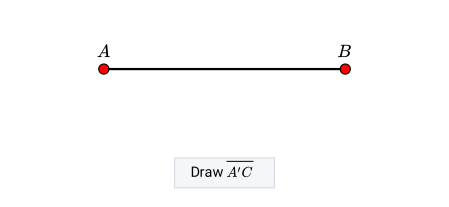
2
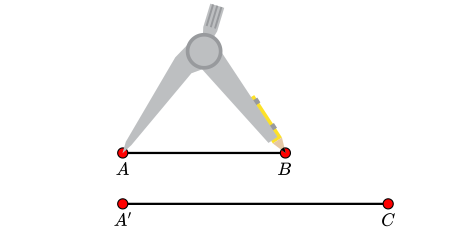
Measure AB with a Compass
expand_more To make a segment with the same length as AB, measure the original segment with a compass. To do so, place the needle point on one of its endpoints and place the pencil on the other end.
3
Mark Point B′ on the New Segment
expand_more The compass is now set to the correct length. After moving the compass to the new segment, mark where the end should be with the pencil.
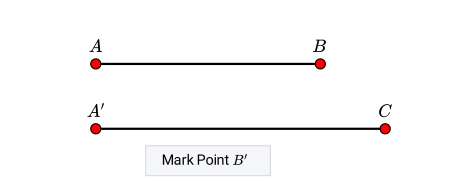 This mark shows where to place the endpoint of the new segment.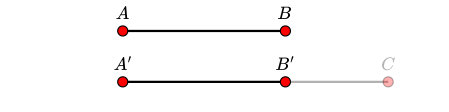
It has been shown that A′B′ has the same length as AB.
Discussion
Constructing a Bisector of a Segment
Now, it will be shown how to construct the geometric objects that bisect a segment.
To bisect a segment means to draw the object that bisects it, or passes through its midpoint.

1
Draw an Arc Centered at A
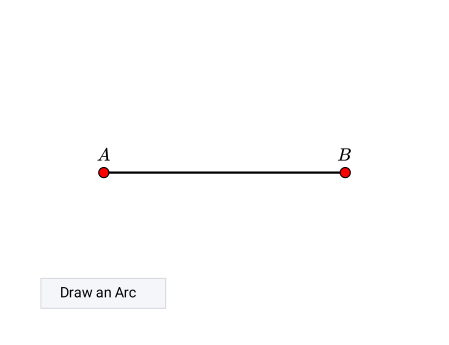
expand_more Place a compass with its needle point at A. Set the compass to go beyond half the length of the segment. Then draw an arc that intersects the segment.
2
Draw an Arc Centered at B with the Same Radius
expand_more Keep the compass set to the same length. Then place the needle point at the other end of the segment and draw a second arc across the segment.
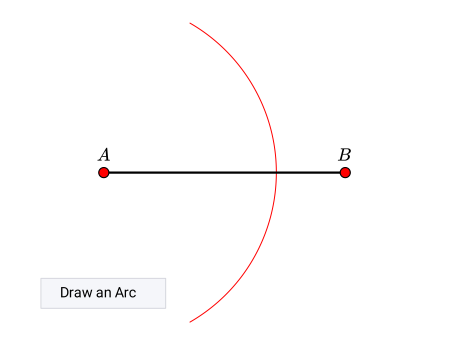
If the arcs have been drawn large enough, they will now intersect each other twice. If they don't, extend them.
3
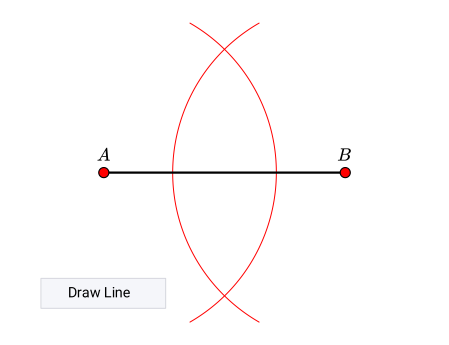
Draw a Line Through the Points of Intersections of Arcs
expand_more Use the straightedge to draw a line through the intersection points of the arcs. The point where the line and the segment intersect is the midpoint of AB.
4
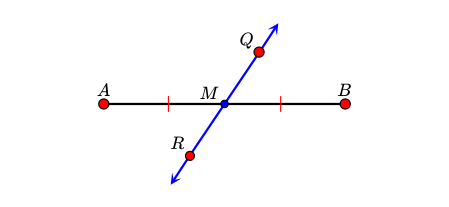
Bisectors of AB
expand_more Any line that passes through the midpoint of AB is a bisector of AB.
Discussion
Constructing the Perpendicular Bisector of a Segment
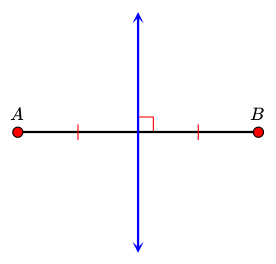
The steps taken to bisect a segment are also used to construct a perpendicular bisector.
On any given segment, a compass and a straightedge can be used to draw its perpendicular bisector.
1
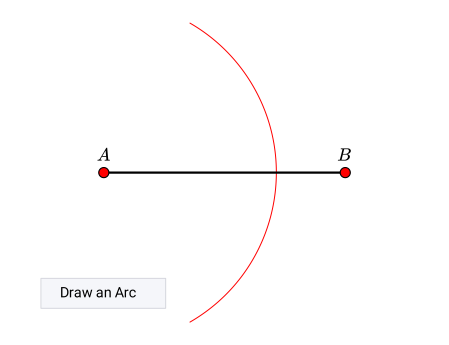
Draw an Arc Centered at A
expand_more 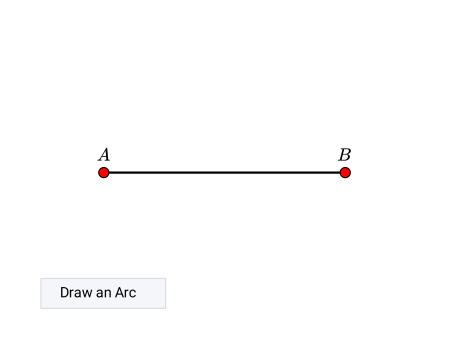
2
Draw an Arc Centered at B with the Same Radius
expand_more Keeping the same compass length, draw another arc on the opposite side. Since the measure of the compass is greater than half the length of the segment, the two arcs should intersect at two distinct points.
3
Draw the Line Through the Points of Intersections of Arcs
expand_more Using a straightedge, draw the line through the points of intersection of the arcs.
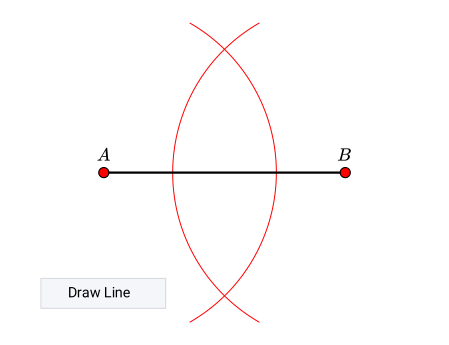 This line is perpendicular to the given segment and their intersection is at the midpoint of the segment. Therefore, it is the desired perpendicular bisector.
Example
Solving Problems by Constructing Bisectors
Constructions, such as drawing a line, can come in handy when building things in real life. For example, in carpentry, it is common practice to divide wooden material in half.
Vincenzo likes to practice wood carving in his free time. He is given a basswood log, from his abuelita. The log has already been cut into a square shape. To make a carving he has in mind, he wants to reshape the log into a rectangular shape with a height that is twice its width.
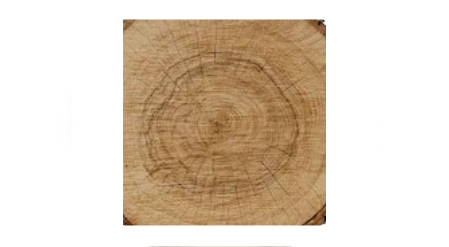
Help Vincenzo draw a line that divides the log into a rectangle and meets the given characteristics. He would then be able to use this line to cut the wood to obtain the shape he wants.
Answer
See solution.
Hint
Choose one side and draw its perpendicular bisector.
Solution
The perpendicular bisector of one side will divide the log in half, creating two rectangles. 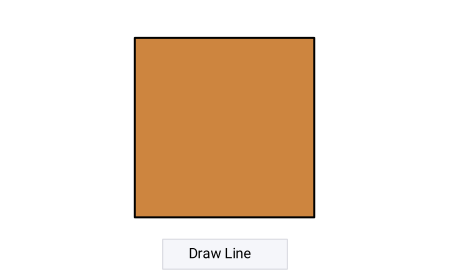 To draw the perpendicular bisector, place the tip of the compass on one of the vertices of the square log. Just by eyeballing, open the compass beyond the midpoint of AB, and draw an arc. Afterwards, place the tip on the other adjacent endpoint and draw another arc with the same radius.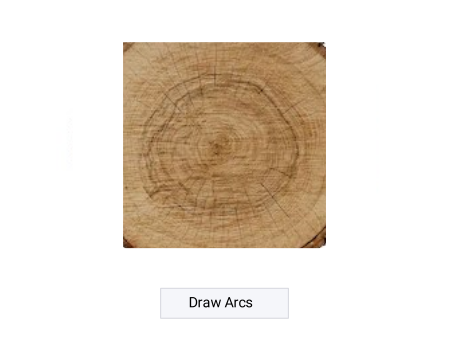
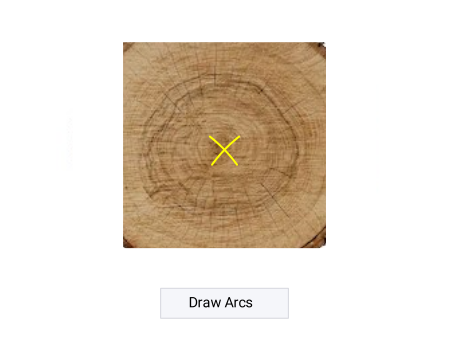
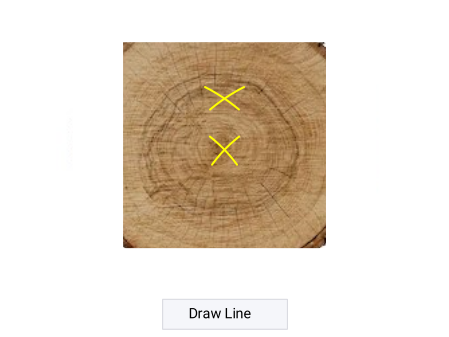
Repeat this procedure using a larger width than the previous one.
Finally, using a straightedge, draw the line that connects the intersection points of the arcs.
As can be seen, with the help of a straightedge and a compass, the perpendicular bisector has been drawn. By cutting the wood with the help of this line, Vincenzo can get the rectangular piece with a height that is twice its width. He even ends up with a second piece!
Discussion
Constructing a Perpendicular Line
A line perpendicular to a given line through a point can be drawn by using a compass and straightedge. This perpendicular line is unique and is described by the Perpendicular Postulate.
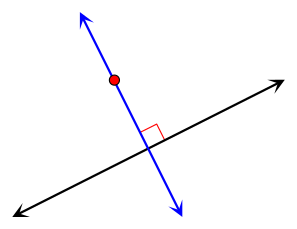
Given a line and a point, a perpendicular line through the point can be drawn by following these steps.
1
Draw a Circle Across the Line
expand_more 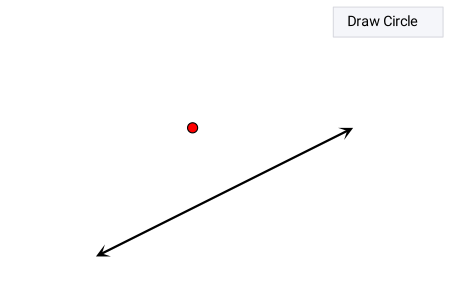
2
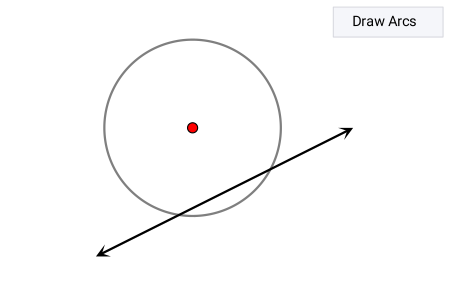
Draw Two Arcs That Intersect Each Other
expand_more Next, keeping the compass set, place its needle point at a point where the line intersects the circle. Draw an arc. Then from the other point of intersection draw another arc. The arcs should intersect each other outside the circle.
3
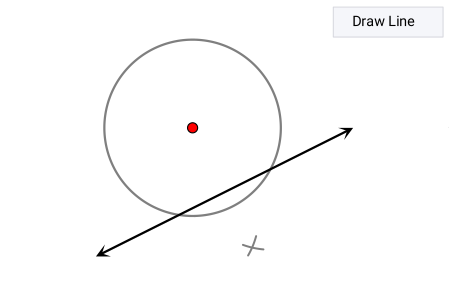
Use a Straightedge to Draw the Perpendicular Line
expand_more Finally, use a straightedge to draw the line through the given point and the point of intersection between the arcs. This line is perpendicular to the given line.
Explore
Using Circles to Construct Angles
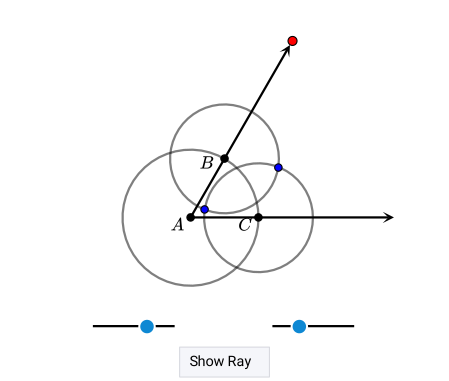
In the second half of the lesson, the other basic constructions that involve angles will be understood. Consider the angle BAC. The applet shows three circles on the angle. Two of the circles, ⊙B and ⊙C, have the same radius. Examine the ray with a starting point A and passing through the intersection points of ⊙B and ⊙C.
Discussion
Constructing a Copy of an Angle
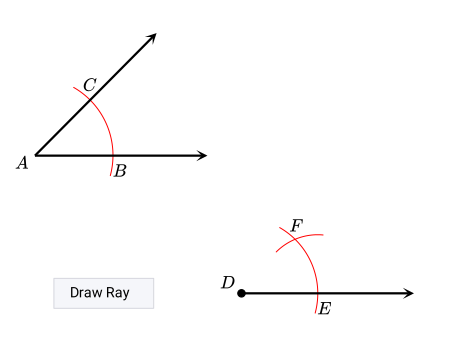
An angle can be constructed as a copy of a given angle using a compass and a straightedge.
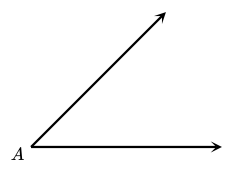
1
Draw a Ray with Endpoint D
expand_more To begin, draw a ray using a straightedge. 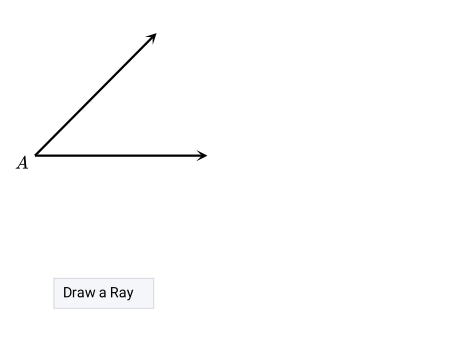
2
Draw Arcs Across the Rays
expand_more Next, place the needle point of the compass at the vertex of the angle. Then, draw an arc across the rays at any distance from the vertex. With the same compass setting, position the needle point at D, and draw an arc across the ray. 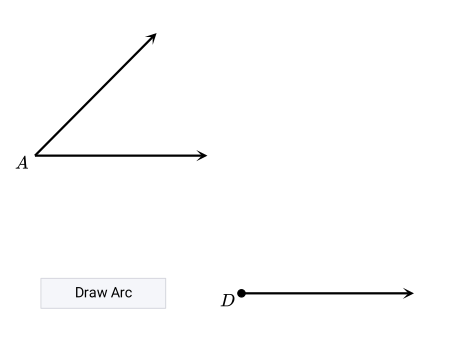
3
Draw an Arc With Radius BC and Center E
expand_more Bring the compass back to the original angle. Adjust the compass to measure the distance between the rays at their points of intersection. With that measurement, return to the what is becoming the copy. Align the needle point of the compass onto the ray and the arc's point of intersection. Mark this distance onto the arc. 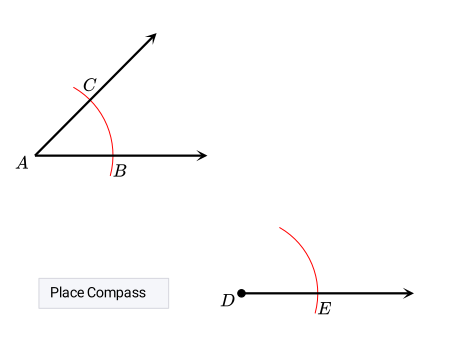
4
Draw a Ray From D Through F
expand_more On the copy, the second ray can be drawn from the endpoint on the first ray. Draw a segment from this point through the marked position on the arc.
Discussion
Constructing the Bisector of an Angle
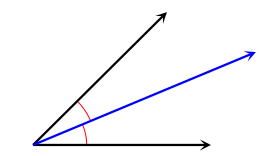
An angle bisector consists of points that are equidistant from the two sides of the angle, creating a ray. The applet on the previous explore slide illustrates those points and the ray.
An angle can be bisected using a compass and a straightedge.
1
Draw an Arc Across the Rays
expand_more 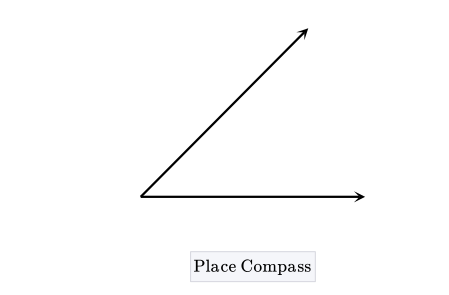
2
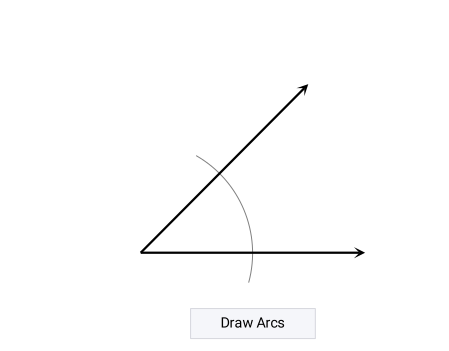
Draw Two New Arcs Intersecting Each Other
expand_more Next, keeping the compass set, place the needle at the points where the rays intersect the arc. Draw two new arcs intersecting each other.
3
Use a Straightedge to Draw the Angle Bisector
expand_more Use a straightedge to draw a ray from the vertex through the intersection between the two arcs.
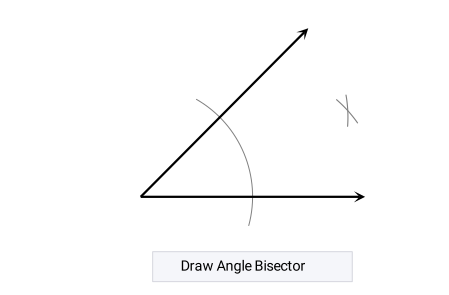 This ray is the angle bisector. It divides the angle into two congruent angles.
Discussion
Constructing Parallel Lines
One of the great things about constructions is that some constructions can even be used to produce other constructions.
The Parallel Postulate states that exactly one line through a point P exists that is parallel to a line ℓ. The line through P can be found using a compass and a straightedge.
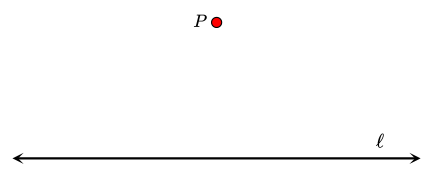
The parallel line can be constructed in several steps.
1
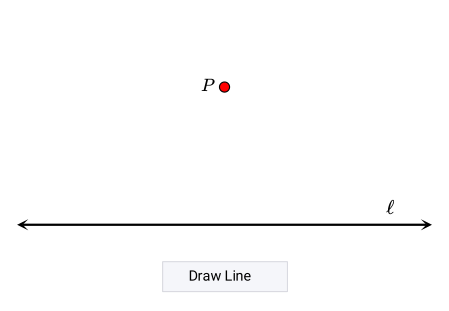
Draw a Line Through P and Across ℓ at an Angle
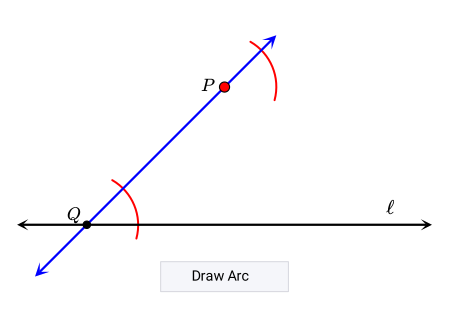
expand_more Begin by drawing a line that intersects ℓ, at any arbitrary location, and goes through the point. The point where the new line intersects ℓ will be named Q.
2
Transfer a Copy of the Angle to P
expand_more A copy of the angle formed by ℓ and QP will be constructed in order to transfer the copy to point P. To copy the angle, begin by fixing the needle of the compass at Q. With the compass set to an arbitrary length, draw an arc on QP between Q and P. Then, with the same setting, draw an arc from P across QP.
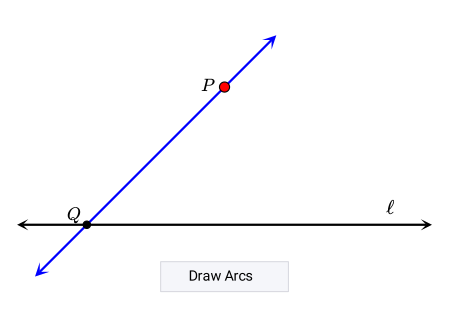
Adjust the radius of the compass so that both compass ends are on the first drawn arc's intersection points with ℓ and QP. Using that setting, place the needle of the compass where the second arc intersects QP. Draw an arc intersecting the second arc. The point where these arcs intersect can be labeled R.
3
Draw a Line Through P and R
expand_more Draw the line that connects points P and R.
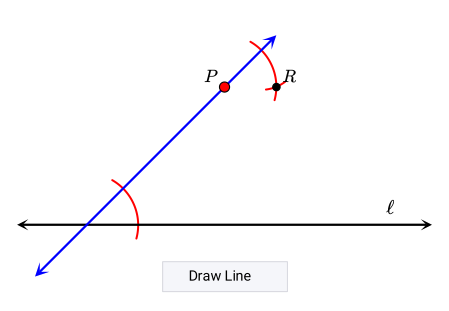 This line is parallel to ℓ.
Example
Creating a Trapezoid by Constructing Parallel Lines
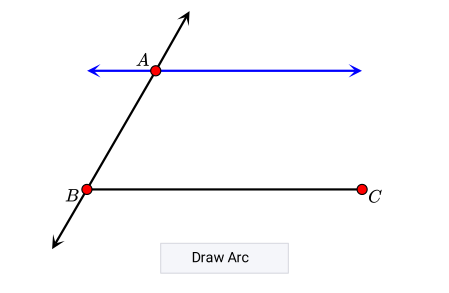
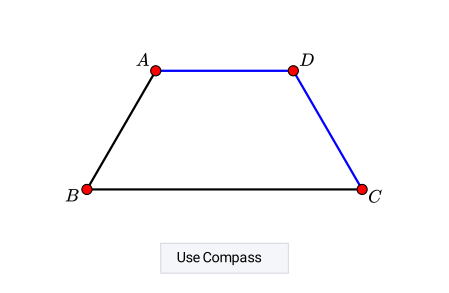
Maya and Tearrik are playing a game called Construct It if You Can! Tearrik starts the game by drawing AB and BC as shown. It is then Maya's turn to complete the drawing into a trapezoid. The trapezoid can be constructed by using segments of the same length as AB. Therefore, there is one catch: Maya is only allowed to use copies of AB to complete the trapezoid.
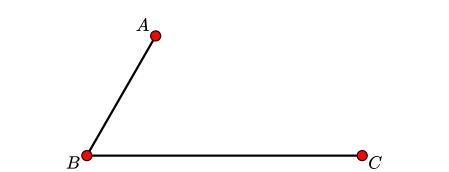
Help Maya construct the trapezoid that Tearrik desired by using compass, and a straightedge.
Answer
See solution.
Hint
A trapezoid is a quadrilateral with exactly one pair of parallel sides.
Solution
It seems that AB looks shorter than BC and Maya can only use copies of AB. Therefore, one of the sides that will be drawn should be parallel to BC. Otherwise, the segments will not connect in the shape of a trapezoid. After the parallel line is drawn, the fourth side of the trapezoid can be drawn.
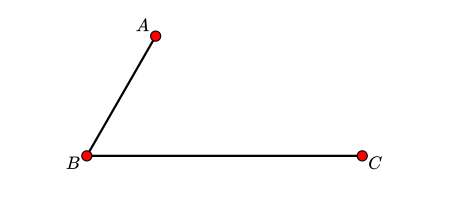
Drawing a Parallel Segment
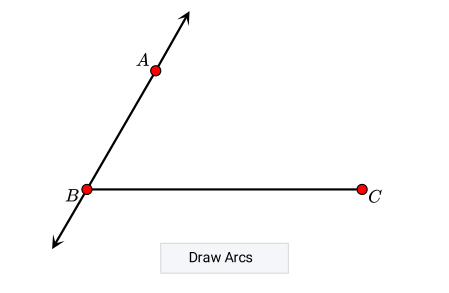
To draw a segment parallel to BC and through A, there are three steps to follow.
- Draw a Line through A and across BC at an angle.
- Construct a copy of the angle.
- Draw a line through A and the point created by the two intersecting arcs.
To make the next steps easier, AB ought to be extended using a straightedge.
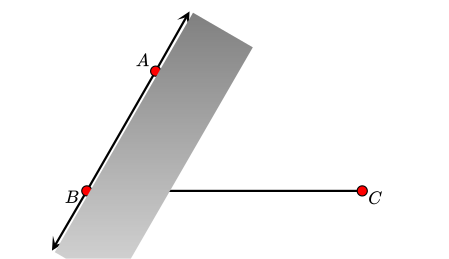
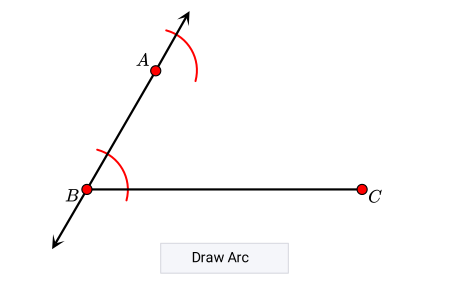
Here, a copy of ∠B will be constructed in such a way that the copy will be located at point A. To do so, draw an arc centered at B across the angle. Then, with the same setting, draw another arc centered at A.
Adjust the compass so that both ends align with points of intersection of the first arc in relation to the two lines. With that compass setting, place the compass needle where the second arc intersects AB and draw an arc that intersects the second arc. Name the arcs' point of intersection R.
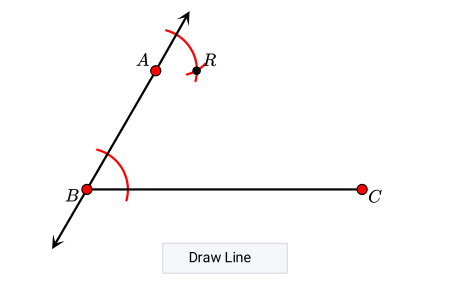
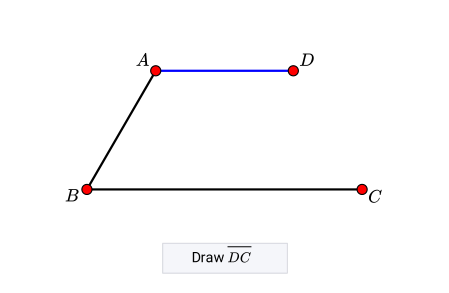
Completing the Trapezoid
Finally, with the help of a straightedge, D and C can be connected. After deleting the auxiliary arcs and lines, a trapezoid can be seen.
Closure
Constructions and Real Life Applications
Considering the constructions studied throughout the lesson, it is noteworthy that the compass is used to set equidistant points and the straightedge is used to set collinearity.
Geometric constructions are practical not only for showing geometric relationships or suggesting new ones but also for making designs. For example, a flower with six petals can be drawn by a compass alone. Give it a try!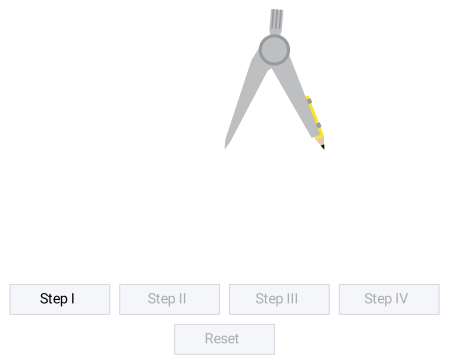
Compass and Straight Edge Constructions
Exercises
The diagram shows ∠BAC.
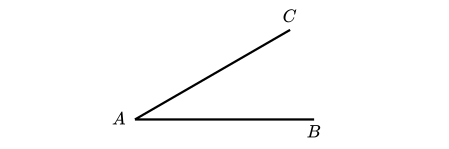
Which diagram shows the construction of copying ∠BAC?

{"type":"choice","form":{"alts":["<span class=\"katex\"><span class=\"katex-html\" aria-hidden=\"true\"><span class=\"base\"><span class=\"strut\" style=\"height:0.7109375em;vertical-align:0em;\"><\/span><span class=\"mord text\"><span class=\"mord Roboto-Bold textbf\">A<\/span><\/span><\/span><\/span><\/span>","<span class=\"katex\"><span class=\"katex-html\" aria-hidden=\"true\"><span class=\"base\"><span class=\"strut\" style=\"height:0.7109375em;vertical-align:0em;\"><\/span><span class=\"mord text\"><span class=\"mord Roboto-Bold textbf\">B<\/span><\/span><\/span><\/span><\/span>","<span class=\"katex\"><span class=\"katex-html\" aria-hidden=\"true\"><span class=\"base\"><span class=\"strut\" style=\"height:0.73046875em;vertical-align:-0.009765625em;\"><\/span><span class=\"mord text\"><span class=\"mord Roboto-Bold textbf\">C<\/span><\/span><\/span><\/span><\/span>","<span class=\"katex\"><span class=\"katex-html\" aria-hidden=\"true\"><span class=\"base\"><span class=\"strut\" style=\"height:0.7109375em;vertical-align:0em;\"><\/span><span class=\"mord text\"><span class=\"mord Roboto-Bold textbf\">D<\/span><\/span><\/span><\/span><\/span>"],"noSort":true},"formTextBefore":"","formTextAfter":"","answer":2}
security
report
code
security
report
code
We want to copy the given angle by ourselves. To copy the angle, we need a compass and a straightedge. There are four basic steps to copying an angle.
If we draw a segment from A' to the point of intersection of the arcs from Step 3, we will have copied the angle.
This diagram matches with the diagram in C.
security
report
code
Which diagram shows the correct construction of the angle bisector of ∠BAC?
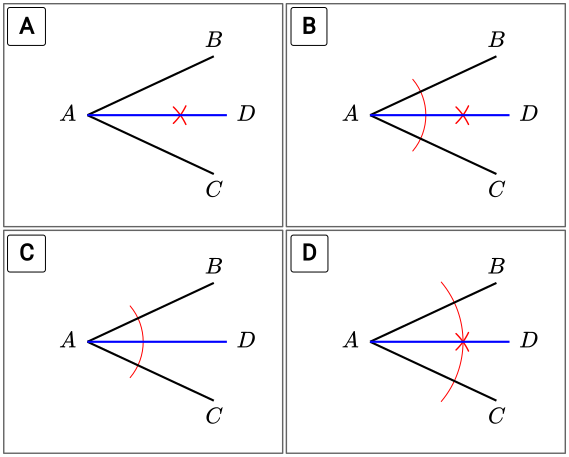
{"type":"choice","form":{"alts":["<span class=\"katex\"><span class=\"katex-html\" aria-hidden=\"true\"><span class=\"base\"><span class=\"strut\" style=\"height:0.7109375em;vertical-align:0em;\"><\/span><span class=\"mord text\"><span class=\"mord Roboto-Bold textbf\">A<\/span><\/span><\/span><\/span><\/span>","<span class=\"katex\"><span class=\"katex-html\" aria-hidden=\"true\"><span class=\"base\"><span class=\"strut\" style=\"height:0.7109375em;vertical-align:0em;\"><\/span><span class=\"mord text\"><span class=\"mord Roboto-Bold textbf\">B<\/span><\/span><\/span><\/span><\/span>","<span class=\"katex\"><span class=\"katex-html\" aria-hidden=\"true\"><span class=\"base\"><span class=\"strut\" style=\"height:0.73046875em;vertical-align:-0.009765625em;\"><\/span><span class=\"mord text\"><span class=\"mord Roboto-Bold textbf\">C<\/span><\/span><\/span><\/span><\/span>","<span class=\"katex\"><span class=\"katex-html\" aria-hidden=\"true\"><span class=\"base\"><span class=\"strut\" style=\"height:0.7109375em;vertical-align:0em;\"><\/span><span class=\"mord text\"><span class=\"mord Roboto-Bold textbf\">D<\/span><\/span><\/span><\/span><\/span>"],"noSort":true},"formTextBefore":"","formTextAfter":"","answer":1}
security
report
code
security
report
code
Let's try to bisect the angle by ourselves. To bisect an angle, we will use a compass and a straightedge. There are three steps to bisecting an angle.
With these three steps, we have successfully bisected the angle.
This matches with option B.
security
report
code
Which diagram shows the correct construction of the perpendicular bisector of AB?
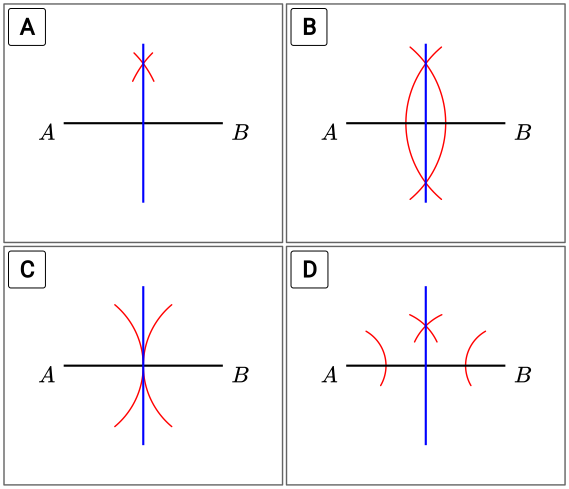
{"type":"choice","form":{"alts":["<span class=\"katex\"><span class=\"katex-html\" aria-hidden=\"true\"><span class=\"base\"><span class=\"strut\" style=\"height:0.7109375em;vertical-align:0em;\"><\/span><span class=\"mord text\"><span class=\"mord Roboto-Bold textbf\">A<\/span><\/span><\/span><\/span><\/span>","<span class=\"katex\"><span class=\"katex-html\" aria-hidden=\"true\"><span class=\"base\"><span class=\"strut\" style=\"height:0.7109375em;vertical-align:0em;\"><\/span><span class=\"mord text\"><span class=\"mord Roboto-Bold textbf\">B<\/span><\/span><\/span><\/span><\/span>","<span class=\"katex\"><span class=\"katex-html\" aria-hidden=\"true\"><span class=\"base\"><span class=\"strut\" style=\"height:0.73046875em;vertical-align:-0.009765625em;\"><\/span><span class=\"mord text\"><span class=\"mord Roboto-Bold textbf\">C<\/span><\/span><\/span><\/span><\/span>","<span class=\"katex\"><span class=\"katex-html\" aria-hidden=\"true\"><span class=\"base\"><span class=\"strut\" style=\"height:0.7109375em;vertical-align:0em;\"><\/span><span class=\"mord text\"><span class=\"mord Roboto-Bold textbf\">D<\/span><\/span><\/span><\/span><\/span>"],"noSort":true},"formTextBefore":"","formTextAfter":"","answer":1}
security
report
code
security
report
code
We can construct the perpendicular bisector of AB. To do so, we will use a straightedge and a compass. There are two steps we must perform.
Step 1: Draw Arcs Across AB
To construct the perpendicular bisector we must first draw arcs from each endpoint of the segment.
- 1a. Place the needle point of the compass at A. Draw an arc that is greater than half the length of AB.
- 1b. Keeping the compass radius intact, move the needle to B. Draw a second arc that intersects the first arc twice.
Step 2: Draw the Perpendicular Bisector
Use the straightedge to draw a segment through the points of intersections of the arcs.
This segment is the perpendicular bisector to AB, meaning it cuts the AB at a right angle and into two equal halves.
This diagram matches option B.
security
report
code
Jordan wants to construct a copy of AB using a straightedge and a compass.

I. II. III. Measure the length of AB with the compass.Use the straightedge to draw a segmentthat is longer than AB. Call it A′C′Mark the same distance as AB on A′C′
{"type":"choice","form":{"alts":["<span class=\"katex\"><span class=\"katex-html\" aria-hidden=\"true\"><span class=\"base\"><span class=\"strut\" style=\"height:0.7109375em;vertical-align:0em;\"><\/span><span class=\"mord text\"><span class=\"mord Roboto-Bold textbf\">II<\/span><span class=\"mord textbf\">\u00a0-\u00a0<\/span><span class=\"mord Roboto-Bold textbf\">I<\/span><span class=\"mord textbf\">\u00a0-\u00a0<\/span><span class=\"mord Roboto-Bold textbf\">III<\/span><\/span><\/span><\/span><\/span>","<span class=\"katex\"><span class=\"katex-html\" aria-hidden=\"true\"><span class=\"base\"><span class=\"strut\" style=\"height:0.7109375em;vertical-align:0em;\"><\/span><span class=\"mord text\"><span class=\"mord Roboto-Bold textbf\">II<\/span><span class=\"mord textbf\">\u00a0-\u00a0<\/span><span class=\"mord Roboto-Bold textbf\">III<\/span><span class=\"mord textbf\">\u00a0-\u00a0<\/span><span class=\"mord Roboto-Bold textbf\">I<\/span><\/span><\/span><\/span><\/span>","<span class=\"katex\"><span class=\"katex-html\" aria-hidden=\"true\"><span class=\"base\"><span class=\"strut\" style=\"height:0.7109375em;vertical-align:0em;\"><\/span><span class=\"mord text\"><span class=\"mord Roboto-Bold textbf\">III<\/span><span class=\"mord textbf\">\u00a0-\u00a0<\/span><span class=\"mord Roboto-Bold textbf\">I<\/span><span class=\"mord textbf\">\u00a0-\u00a0<\/span><span class=\"mord Roboto-Bold textbf\">II<\/span><\/span><\/span><\/span><\/span>","<span class=\"katex\"><span class=\"katex-html\" aria-hidden=\"true\"><span class=\"base\"><span class=\"strut\" style=\"height:0.7109375em;vertical-align:0em;\"><\/span><span class=\"mord text\"><span class=\"mord Roboto-Bold textbf\">I<\/span><span class=\"mord textbf\">\u00a0-\u00a0<\/span><span class=\"mord Roboto-Bold textbf\">III<\/span><span class=\"mord textbf\">\u00a0-\u00a0<\/span><span class=\"mord Roboto-Bold textbf\">II<\/span><\/span><\/span><\/span><\/span>"],"noSort":false},"formTextBefore":"","formTextAfter":"","answer":0}
security
report
code
security
report
code
Let's try to copy the given segment by ourselves. To copy the segment, we will use a compass and a straightedge. We first use the straightedge to draw a segment that is longer than AB.
Looking at the given steps, we then measure the length of AB with compass and mark that distance on A'C'.
If we erase B'C', we will have successfully copied the segment. Therefore, the order Jordan should follow is II - I - III.
security
report
code
Which diagram shows the correct construction of a line perpendicular to AB that passes through P?
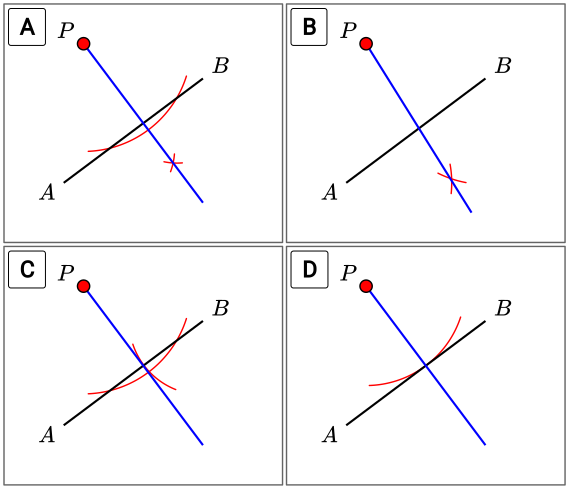
{"type":"choice","form":{"alts":["<span class=\"katex\"><span class=\"katex-html\" aria-hidden=\"true\"><span class=\"base\"><span class=\"strut\" style=\"height:0.7109375em;vertical-align:0em;\"><\/span><span class=\"mord text\"><span class=\"mord Roboto-Bold textbf\">A<\/span><\/span><\/span><\/span><\/span>","<span class=\"katex\"><span class=\"katex-html\" aria-hidden=\"true\"><span class=\"base\"><span class=\"strut\" style=\"height:0.7109375em;vertical-align:0em;\"><\/span><span class=\"mord text\"><span class=\"mord Roboto-Bold textbf\">B<\/span><\/span><\/span><\/span><\/span>","<span class=\"katex\"><span class=\"katex-html\" aria-hidden=\"true\"><span class=\"base\"><span class=\"strut\" style=\"height:0.73046875em;vertical-align:-0.009765625em;\"><\/span><span class=\"mord text\"><span class=\"mord Roboto-Bold textbf\">C<\/span><\/span><\/span><\/span><\/span>","<span class=\"katex\"><span class=\"katex-html\" aria-hidden=\"true\"><span class=\"base\"><span class=\"strut\" style=\"height:0.7109375em;vertical-align:0em;\"><\/span><span class=\"mord text\"><span class=\"mord Roboto-Bold textbf\">D<\/span><\/span><\/span><\/span><\/span>"],"noSort":true},"formTextBefore":"","formTextAfter":"","answer":0}
security
report
code
security
report
code
Let's draw the line that satisfies the specified properties ourselves. To construct a line that is perpendicular to AB, we need a straightedge and a compass. Let's construct it!
Now we have drawn a perpendicular line to AB that also passes through P.
This matches option A.
security
report
code
Compass and Straight Edge Constructions
Recommended exercises
To get personalized recommended exercises, please login first.
Loading content
≤
>
■2
■▢
e▢
7
8
9
×
÷■1
=
=
√▢
▢√
∫▢▢
4
5
6
+
−
≤
<
log
ln
log▢
1
2
3
()
∣
sin
cos
tan
0
.
π
x
y
Loading content