Sign In
θ+90^(∘)+45^(∘)=180^(∘)
Let's solve for θ.
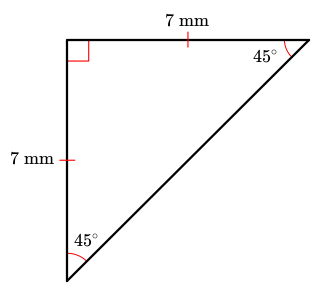
The unknown angle is 45^(∘) which means this is an isosceles triangle.
All we need now is the length of the triangles hypotenuse. Since we know both legs, we can find this side by using the Pythagorean Theorem.
a= 7, b= 7
Calculate power
Add terms
Rearrange equation
sqrt(LHS)=sqrt(RHS)
c > 0
When we know all sides of the triangle, we can find the perimeter. 7+7+sqrt(98) ≈ 23.899 mm
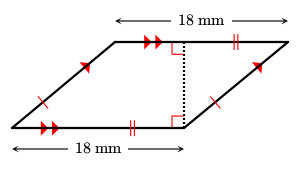
By finding the length of one of the slanted sides, we can therefore determine the total perimeter. From the information in the given diagram, we can identify the legs of a right triangle.
When we know the length of the legs, we can use the Pythagorean Theorem to calculate the length of the slanted sides.
a= 9, b= 12
Calculate power
Add terms
Rearrange equation
sqrt(LHS)=sqrt(RHS)
c > 0
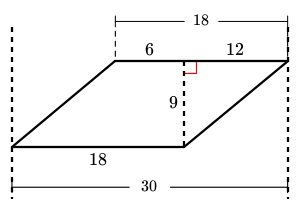
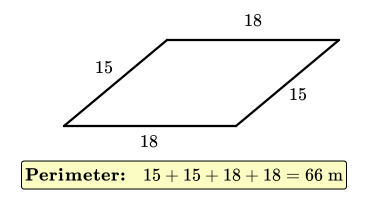
The length of the slanted sides are 15 m. With this, we can calculate the perimeter of the figure.
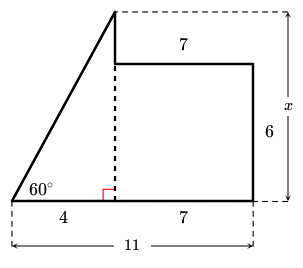
To find the value of x, we can use the tangent ratio.
Substitute values
LHS * 4=RHS* 4
Rearrange equation
Calculate quotient
Round to 2 decimal place(s)
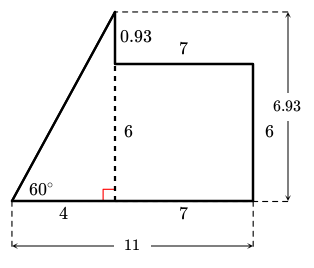
When we know the value of x, we can find the length of the smaller side
With this additional information, we can calculate the hypotenuse of the right triangle. Note that we will substitute the exact value of x, which is 4tan 60^(∘), to avoid rounding errors.
a= 4, b= 4tan(60^(∘))
Calculate power
Add terms
Rearrange equation
sqrt(LHS)=sqrt(RHS)
c > 0
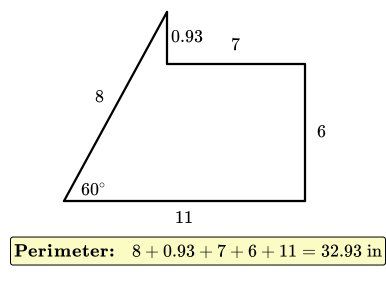
Now that we know all of the shape's sides, we can determine its perimeter.