A
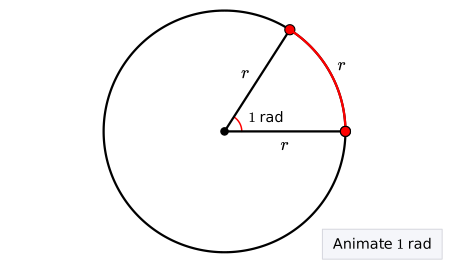
radian, like a , is an unit. One radian is defined as the measure of the that intercepts an equal in to the of the circle. It corresponds to roughly
57.3∘.
If the arc length is
2 radii, the measure of the corresponding central angle is
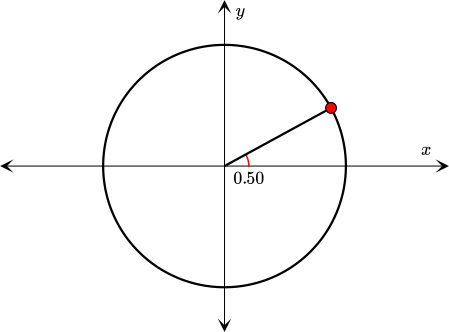
2 radians, and so on. Therefore, radians describe the number of radii an angle creates on a circle.
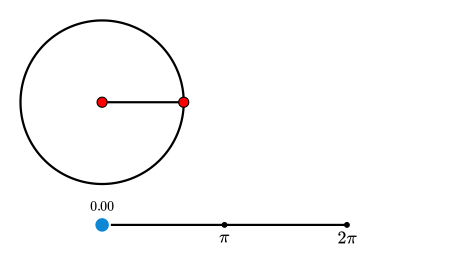
It can be observed that a corresponds to an arc length of
π radii and the corresponds to an arc length of
2π radii.
Measured in degrees, a semicircle is equal to
180∘. Therefore,
π radians and
180∘ correspond to the same angle measure.
180∘=π rad
By using this relation, degrees can be into radians and vice versa. In calculations, even if the angle is given in radians,
rad
is seldom written. Instead, no unit marker indicates radians. Consider two expressions.
cos64∘andcos5
The first angle is given in degrees, and the other is given in radians. At first glance, radians might seem inconvenient, but they make calculations simpler in certain circumstances, like derivatives and integration. Radians are also the SI unit for angles.